How ancient Chinese architects defied Earthquakes for six centuries
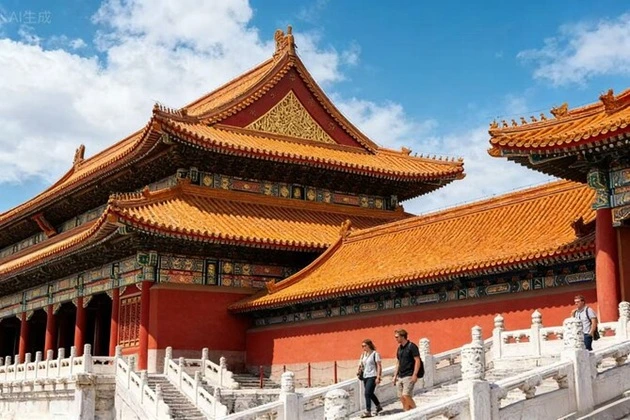
The Forbidden City in Beijing is visited by millions of tourists every year, who can see its grandeur: a huge square with golden roofs of buildings, purple-red walls, and a monolithic 250-kilogram white marble stone. But few people think about how people without sophisticated technology were able to build Gugun, an architectural masterpiece, in just 14 years. And most importantly, why is it still standing, even though it is located in a seismically active zone and has survived more than two hundred earthquakes?
A city within a city: the scope of the palace project for the Emperor

Probably, the Forbidden City would not have existed if Emperor Zhu Di had not decided to create a new capital where he could be more respected than in Nanjing, where he was not loved because he had forcibly seized the throne, declaring himself the sole ruler.
The choice of location for the capital fell on Beijing, the former imperial patrimony in the north, which also served as a buffer against the Mongols. But the emperor, who called himself “Eternal Happiness” and considered himself no less than the son of Heaven, was not satisfied with a simple move. He needed a palace that emphasized his greatness and importance. This was how the city was conceived, which would later be called “Forbidden”, because ordinary mortals were forbidden to enter there, but they could not leave without permission. Construction began in 1406.
Forbidden City: 9999 and a half rooms and 14 years of wonder
Any construction takes a long time, and when it is on a large scale, and even without the help of technology, it seems that it should have dragged on for centuries. It’s like the Cologne Cathedral, which was built over 6 centuries, or the Aqueducts of Ancient Rome, which were built over decades. The Forbidden City in China was built in 14 years because the emperor wanted it that way, and the world got one of the greatest architectural wonders, with everything amazing.
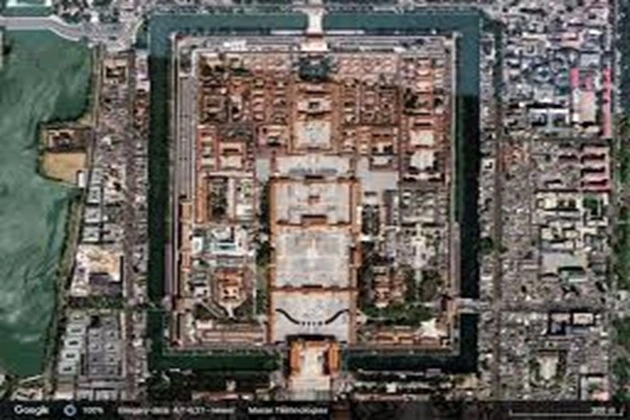
About 980 buildings on 720,000 square meters have been erected in the city. This is a very large area. For example, they wanted to build a sports cluster with sports facilities and a football academy for mass visits on a similar site in the Karaganda region. In the 15th century, one man took so much for himself because he was an emperor who wanted 9,999.5 rooms. The question arises, why not make exactly 10,000? In this case, Chinese philosophy and faith in the gods could not do without it – the emperor, out of politeness, made half less, because there was an even number of rooms in the heavenly palace of the Jade Emperor. The Son of Heaven, Zhu Di, decided to show respect to the higher powers.
A city within a city turned out to be a Forbidden City, protected from the other part by moats with water and walls. The defensive structures consisted of a 10-meter wall, a 52-meter moat, and a perimeter wall 3.5 km long. But the main miracle in all this was the people. More than a million people were involved in the construction. The best craftsmen from all corners of the Celestial Empire, engineers, architects, as well as hundreds of thousands of peasants and soldiers who were forcibly rounded up, are gathered.
It was not a construction site in the usual sense. Each province of the empire received its own order: some chopped and transported wood, others mined stone, and others sent the best artisans. The whole country, from the southern rice fields to the northern forests, worked for one goal.
How expensive materials were delivered: precious wood, marble slabs, and “golden bricks.”
To implement the construction plan, the material was needed, and considering that it was intended for the emperor, it was the best. This is where the heroic path of ordinary people begins. For example, the frame of the buildings and the throne were made of precious febe wood, which resisted corrosion and rot. It grew 1,800 km from Beijing in the mountains, and lumberjacks risked their lives when felling huge trees because they had to be delivered whole. 1,000 lumberjacks left, and 500 returned. Then they had to be floated down a canal that was specially built; it took 3-4 years.White marble for balustrades and railings
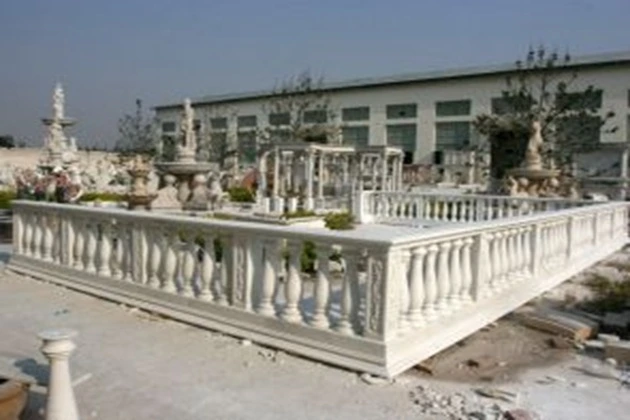
Most of the terraces, stairs, and balustrades are made of white marble, which also had to be delivered, because, in fact, Beijing did not have any valuable natural resources at all. Visit. A F R I N I K . C O M . For the full article. Marble was mined 70 km from the city, and the marble slab that underlies the ramp can serve as a monument to great labor. It weighs 250 kg.
In the 15th century, the only technologies were ropes, humans, and buffalo as draft vehicles. Engineers have come up with a way to deliver the block to the palace in one piece. On the way to the construction site (70 km), wells were dug every 500 meters, waited for a very cold winter, and then made an ice slide, pouring water on the passage where the marble had to be dragged. For this, 20,000 people and a thousand mules were involved, who pushed the block for 28 days.
They made “golden bricks” for the floor. In fact, they were made of clay, but the process was so long and complicated that one batch took more than a year to prepare, but they “sounded” incredibly strong and perfectly smooth. The cost of one brick was equivalent to several sacks of rice, which was a fortune for an ordinary peasant.
How does a wooden palace withstand earthquakes
Beijing is located in a seismically active zone. Over the past six hundred years, more than two hundred devastating earthquakes have occurred here, and the Forbidden City stands as if nothing had happened. What’s the trick?
It’s all about the foundation. The buildings here were not placed on a rigid base, but on a multi-layered cushion of packed earth and rubble. When the earth starts to shake, such a cushion dampens vibrations — it works as a shock absorber. The main secret is the Dungeon System. It sounds complicated, but in reality, these are wooden brackets that connect the pillars to the roof beams. And that’s what’s amazing: there’s not a single nail in this construction! Not a drop of glue! The elements are simply inserted into each other, like the parts of a huge construction.
During an earthquake, the dowgun acts as a hinge. The structure shifts, rubs, absorbs the energy of the tremors — and then returns to its place. Modern engineers have conducted tests on a vibration platform: the model of the pavilion with such a system withstood an earthquake with a magnitude of 10.1 on the Richter scale. For comparison, the earthquake that destroyed San Francisco in 1906 had a magnitude of about 7.8.
The engineers also took into account the fact that winters in Beijing are harsh, sometimes up to minus 15-20 degrees, and took care of the comfort of the palace’s inhabitants. The emperor and his concubines walked on underfloor heating five hundred years before the Europeans invented central heating.
The system was called “Kan”. A network of chimneys was laid under the floors of the main pavilions. The furnaces were located outside the buildings, where servants loaded smokeless coal. Hot air ran through pipes under the floor and evenly warmed up special “golden bricks”. The heat rose from below, and the rooms were dry and comfortable, and most importantly, fireproof, because the fire remained outside the walls.
The wooden city was constantly burning — fires were the main nightmare of the imperial residence, so the creation of an artificial river was not a whim, but rather a forced measure. It served as the main source of extinguishing water. There were more than three hundred copper boilers throughout the territory — they were constantly filled with water in case of fire. And when they made bridges all over the territory where the river branch passed, it added to the elegance of the territory. But that’s not all. The river also worked as a drainage system. During the summer monsoon, when tropical rains hit the city, Jinshuihe diverted excess water and prevented the palaces from being flooded.
How rice and eggs hold up walls for 600 years
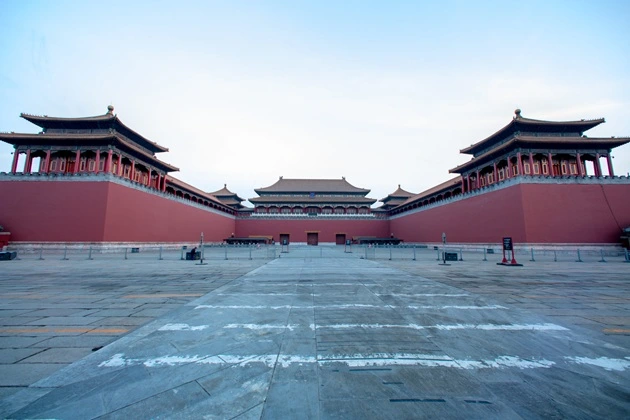
The walls of the Forbidden City are held together with a solution of slaked lime and glutinous rice, not super-strong cement. Surprisingly, ordinary rice became the basis of the solution, and egg whites were added in particularly important areas. This “culinary” cement turned out to be stronger than modern mixtures — the walls have been standing for six centuries, and scientists are still trying to unravel its secret.
The yellow roofs of the city’s buildings are striking, but the emperor himself desired this color of tiles, and no one else in the Celestial Empire dared to use it in architecture. Violation was punishable by death. The exception is the Wenyuange Library: its roof is black so that water (the color of the elements) protects books from fires.
It is impossible not to notice the amazing love for the number ”9” in the Forbidden City: there are 9 rows of 9 copper rivets on the gates, 9,999.5 rooms, and 9 mythical beasts on the skates of the main halls (such an honor is reserved only for the Hall of Supreme Harmony). The explanation is that the number 9 symbolizes the emperor and longevity.
That’s how, without a single nail, without complicated drawings and computer calculations, the ancient masters built a city that survived empires, wars, and hundreds of earthquakes. Zhu Di wanted to build a palace that would become the center of the world, and he succeeded.
The Forbidden City is not just about beautiful buildings. It is an indicator of one man’s ambitions, a textbook on ancient engineering, a map of Chinese cosmology, and a monument to a million builders. And he continues to stand there as a reminder of what a person is capable of when they have a great goal in front of them, and of the price they pay for greatness.