Leonardo da Vinci’s robotic lion: The 500-year-old invention that amazed the king of France
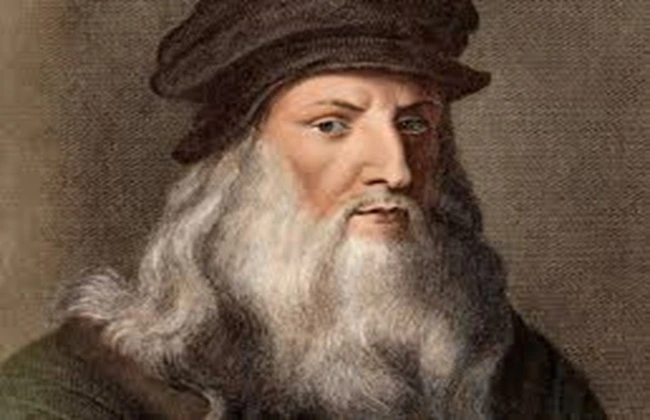
At the beginning of the 16th century, the great inventor Leonardo da Vinci presented his next masterpiece at the court of the King of France. A true miracle of engineering is a lion made of wood and metal, which walked independently, raised its head, and opened a door in its chest, showing a bouquet of lilies (fleur-de-lis is the heraldic symbol of the French kings). How did science and art combine in da Vinci’s invention and become a powerful symbol of diplomacy, astounding the French royal court and the monarch himself?
A miracle of art, mechanics, and diplomacy

The lion was probably commissioned to commemorate the meeting of King Francis I and Pope Leo X in December 1515 in Bologna, but its creation coincided with broader political events. Da Vinci, then serving Pope Leo’s brother, Giuliano de’ Medici, was involved in the political games of the time, helping the disgraced Medici family regain lost power, gaining the favor of the French crown. The Medici were eager to return to Florence, and for this, they needed the approval of the French king. To this end, they ordered da Vinci a luxurious and unusual gift for the monarch to flatter him.
Unfortunately, the original drawings of this engineering marvel have not been preserved. Only fragments of the lion remain, which can be found in the Madrid Codex and other surviving records of the inventor. Most of the information about the first robot was obtained from later sources. It is impossible to figure out what this mechanical lion could do today. Some write that he could growl and move independently over long distances. Modern scientists, having reconstructed the da Vinci robot, prove that what he could do was quite feasible using the technologies of the 16th century.
What made this invention unique was that in those days, most mechanical devices relied on brute force or the flow of water, and da Vinci created a strikingly realistic machine. His mechanical lion was the result of years of careful observation and research. The artist dissected animals, sketched lions in motion, and explored how their joints carry weight.

It is believed that the mechanical abilities of the lion were borrowed from da Vinci’s early experiments with automata. The inventor has already had a similar experience. In the middle of the 15th century, he created a robot knight. This creation, described in da Vinci’s Atlantic Codex (a twelve-volume collection of drawings and notes), included hand articulation and torso rotation systems. Spiral springs or weighted gears, similar to the clockwork mechanisms of that time, probably drove the lion.
The King of France and the Lion of Da Vinci

Da Vinci chose the lion for its power. In heraldry, these animals symbolize courage, strength, and nobility, qualities that Renaissance rulers sought to adopt. The inventor’s choice was not solely due to this. There were several reasons. Firstly, the lion was an explicit reference to the name of Pope Leo X, who commissioned this work, as well as to the name of the artist himself. In addition, he also referred to the city of Lyon in France, where the French king was at that moment, and where the gift was delivered.
In 1516, da Vinci moved to France at the invitation of Francis I. The king granted him the title of “The King’s First Artist, Engineer and Architect” and settled him in the castle of Clos Luce, located near the royal court. Visit. A F R I N I K . C O M . For the full article. By that time, da Vinci was already in his sixties, his health was deteriorating, but his mind was still full of ideas.
Leonardo completed the works that he brought with him. Among them were such famous paintings as “Saint Anna” and “Saint John the Baptist”. Da Vinci also worked tirelessly as an engineer and architect, working on several central urban planning and hydraulic projects commissioned by the king. Despite all the amazing mechanical products of the great master, Leo stands out among all his works with a certain special ambition.
Pioneer of robotics

Of course, it cannot be said that Leo became a source of inspiration for the creation of robotics. But this is probably because the Madrid Codex was lost for centuries and only rediscovered in the 1960s. But the symbolic significance of this mechanical miracle has increased over time. He is the very first, almost mythical ancestor of modern robotics and automata. This lion is a clear indication that long before artificial intelligence and machine learning, some dreamers created amazing machines not to facilitate human labor, but to make an impression. Without a doubt, this unique mechanical work makes da Vinci a pioneer of robotics.

In Leonardo’s works, art and science were never completely separated from each other. The mechanical lion is a complex project both in terms of mechanics and symbolism. Today, a reconstruction of the da Vinci robot is on display at the Milan Museum.