
Sun protection before sunscreen: How Ancient people shielded themselves

Today, when you are outside on a hot sunny day, you usually have to take several sun protection products with you on a trip: sunscreen, sunglasses, and a hat. Although we learned about the harm of the sun relatively recently — it wasn’t until the 1800s that scientists began to understand the harmful potential of ultraviolet rays — people have always sought to avoid the unpleasant effects of excessive sun exposure.
However, the first commercial sunscreens appeared only in the 20th century — before that, people had to look for other ways to prevent sunburn. Here are ways to protect yourself from the sun.
4 ways to protect yourself from the sun
1. Clothing and Shade
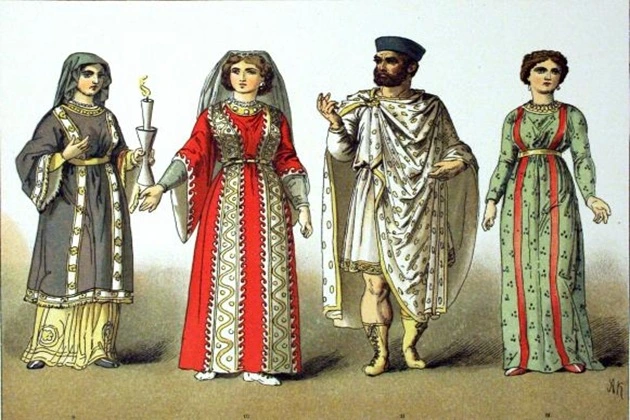
Although it is difficult to determine precisely when people first began actively protecting themselves from the sun, evidence suggests that even in prehistoric times, attempts were made to cover their skin to keep warm in cold weather and to protect themselves from the sun’s heat. People covered themselves with animal skins, plant fibers, leather, and fabrics.
By at least 3000 BC, umbrellas were used in some societies not only as accessories but also to create shade; in ancient Egypt, they were often made from palm leaves or feathers. The Egyptians also wore light, loose-fitting linen clothes and hats to protect themselves from the sun. In ancient Greece, people wore wide-brimmed hats, such as a petasos, to protect their faces and necks from direct sunlight.
2. Pastes and Oils
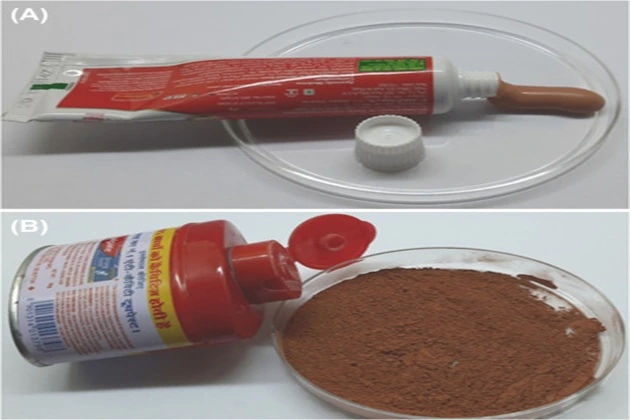
Ancient people also used primitive versions of sunscreens made from natural ingredients. Red ochre, a type of clay-like iron oxide, has been mixed with water and applied to the skin as a paste since the time of Homo sapiens. This mixture was used for ceremonial purposes, but scientists believe it could also serve as a physical barrier from the sun.
The ancient Egyptians, meanwhile, used skin care products made from ingredients such as rice bran (which absorbs ultraviolet light), jasmine (to repair sun-damaged skin), and lupine (believed to improve complexion). Ancient Greece had its approach: Visit. A F R I N I K . C O M . For the full article. olive oil was usually applied to the skin between 800 and 500 BC.
Even though it provides limited protection, modern research has shown that its natural sun protection factor (SPF) is about 8, which is enough to slightly reduce sunburn, although much lower than the currently common SPF of 30 (the minimum recommended by dermatologists). As with ocher, other pastes were made from various natural ingredients, including mud and clay. They were used not only to disguise or decorate ceremonies, but also to protect from the sun. Zinc oxide was used in India as early as 500 BC.
Around 840 AD, the Sama Bajau peoples of Southeast Asia used reeds and spices to protect themselves from the sun. The indigenous peoples of the Americas, meanwhile, used sunflower oil, pine needles, western hemlock bark, and deer fat. Tanaka, a mixture made from crushed bark and water, has been used in Myanmar (formerly Burma) for over 2,000 years.
Masks

Over time, in some societies, including ancient Egypt, and later in Europe and parts of Asia, skin protection became a sign of social status. The pale complexion indicated that you could afford to avoid physical labor outdoors and instead spend your days indoors or in the shade. In Egypt, this desired appearance was achieved through the use of umbrellas and skin care products that protect the skin from the sun’s harmful effects.
In Europe during the 16th century, particularly in France and England, women from high society wore spectacular visor masks to protect their skin from sunburn and maintain a pale complexion. The Vizard mask was made of black velvet with an inner silk lining, and its only distinguishing features were a small protrusion for the nose and small holes for the eyes and mouth. The masks weren’t just creepy to look at—they were quite uncomfortable to wear.
Most models did not have straps, but instead were held in place with a bead or a button clamped between clenched teeth. The owner of the mask was unable to speak while it was on. By the early 1700s, vizard masks had spread not only among the aristocracy but also beyond their intended purpose of preventing sunburn. In 1704, Queen Anne of Great Britain even banned theatrical vizard masks, but by that time, they had already lost their elite status and eventually fell out of use.
4. Tannins and Trusty SPF
By the end of the 19th century, dermatologists had confirmed that prolonged exposure to the sun’s ultraviolet rays could lead to skin inflammation or burns, and scientists began experimenting to develop effective and suitable local sun protection. In 1878, Austrian physician Otto Veiel proposed that tannins, natural compounds found in many plants, could be effective sun protection, but they also discolor the skin.
In 1891, a German doctor conducted an experiment that was probably the first real attempt to create a chemical sunscreen ointment based on quinine to treat skin sensitivity to sunlight. In the early 1900s, German physician Paul Unna developed another precursor to sunscreen, a paste made from natural ingredients, including chestnut extract. Ultimately, these early remedies proved ineffective, either discoloring the skin or being too thick, so experiments continued to seek a better solution.
It wasn’t until the mid-1900s that sunscreens began to resemble the ones we use today. In 1942, the U.S. military requested that the American Medical Association investigate products or substances that could protect soldiers from sunburn during the particularly hot campaigns in the Pacific during World War II. The solution was a thick red veterinary ointment, also known as “red vet pet”. It was waterproof, durable, non-toxic, inexpensive, and, most importantly, relatively effective.
Benjamin Green, a pharmacist from Florida, served in the Air Force throughout the war, and in 1944, he began experimenting with how to make a sticky substance more attractive. He added ingredients such as cocoa butter and coconut oil, creating a smoother, more pleasantly scented lotion—the earliest version of what later became known as Coppertone. Throughout the 1950s and 1960s, sunscreen formulas continued to improve in texture and ingredients, providing broader protection from UVA and UVB rays.
By the 1970s and 1980s, sunscreens were widely marketed to protect against sunburn and as a tanning aid. Today, sun protection can range from as subtle as applying lip balm with an SPF factor to as advanced as UV-protected clothing and tinted window film. The methods may have changed, but the instinct remains the same: when the sun is scorching, we find ways to keep cool, take shelter, and avoid burns.