The Japanese tradition of adult adoption: When a stranger inherits the family name
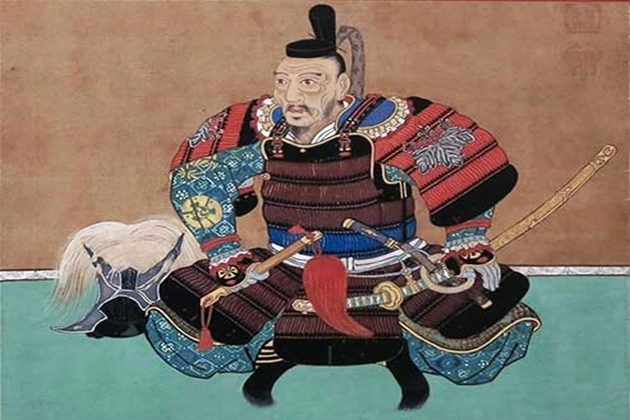
In Japan, there is a legend that at the beginning of the eighth century, there lived a monk, Taite Daishi, who dreamed of the god of Mount Hakusan and told about the existence of a hot spring in a nearby village. The monk told his student Garyo Hoshi about his dream, who found an amazing place and opened an inn there. As the years passed, Garyo Hoshi grew old, and then the question arose: who should I transfer the case to? He had no sons of his own. Then he adopted a boy, who became his heir. Thirteen centuries later, this inn continues to operate; it is listed in the Guinness Book of Records as the oldest family business. This story provides a key to understanding one of the most unusual family traditions in Japan, in which it is not shameful to adopt children and even adult men.
When a man takes his wife’s last name and becomes a son
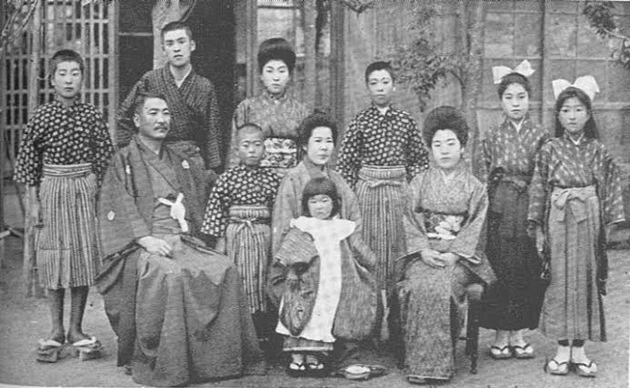
Japan has gone through several stages in building family relationships over the centuries. But despite the differences, there was still something in common: the family always came first because they believed that everyone should have it, and there should be a person to whom the inheritance can be passed on. It is on this occasion that a very interesting tradition has developed.
At first, there was a matrilocal form of the family. In this system, a man was a visiting member and could not even stay in the woman’s house all the time, but only come at night. People began to be considered a couple if they noticed that the same man was visiting the same woman more often. However, a woman could not limit herself to the number of partners and give birth to children from different men. This was not considered a shame, and all the children stayed in their mother’s house, and when they grew up, they could be successfully married off or married off.
The other, patriarchal form will take shape later, and then the woman must follow the man. She will take care of the house, but her main responsibility will be to give birth to an heir. However, nature could not be ordered, and if only girls were born, then the heir was adopted. It could be one of the children of relatives; it was possible to take a completely foreign child or adopt the husband of a daughter-in-law. It was enough for him to take his wife’s last name, and then he was considered a full–fledged eldest son who would receive all the inheritance. Even after a son was born into the family, he did not lose his rights.
Adoption in Japan is a tradition of succession to preserve family property, which is briefly referred to in Japan as “ie”. The younger sons of noble clans, who were called “mukoyoshi”, were often adopted. Everyone benefited from this: there was nothing for the younger ones in their family, because the right of inheritance was passed down by seniority, and being adopted, they received the same right, but only in another family. Many adopted children eventually received high positions and a good inheritance. In the eyes of the law and society, Mukoyoshi is the heir to the house with all the rights and responsibilities that follow.
Why did blood relations recede into the background?

For the European and especially Chinese consciousness, inheritance is inextricably linked with consanguinity, so it is not entirely clear why adopt someone else’s child? But Japanese culture has taken a different path. The fundamental basis of their society has always been not the family as a biological unit, but the “ie” the household: a collective fund of property that is jointly used by everyone who lives under one roof, but overseen by the head. He acts as a trusted person, responsible for the equipment entrusted to him, and then will have to transfer it further into reliable hands. To do this, he will also need a successor, and it does not matter if there is a blood relationship with him. The main thing is that he carries the trust entrusted to him safely through the generations. Therefore, fairy tales about lazy sons and their fortune are not about the Japanese. In this case, they could shamelessly deprive their own son of the right of inheritance, finding a replacement for him in the person of someone else’s boy, boy, or man. The transfer of inheritance could occur before the death of the head, if he made such a decision and retired from business.
Mostly, wealthy merchant families and samurai worried about their inheritance, as they had something to keep and pass on, so their inheritance depended on a good heir. Visit. A F R I N I K . C O M . For the full article. They had the largest percentage of adoptions, reaching more than a third of their total number. That is, in every third or even fourth family, the heir was an adopted child. Society accepted this as the norm, without stigmatizing or condemning either Mukoyoshi or the family that adopted him. Running a household required discipline, business acumen, and dedication—qualities that no one guaranteed at birth.
The art of family survival through other people’s children
Japanese legends are full of stories about lazy and negligent sons, so society has developed a “vaccine” against a situation where a strong household could go bankrupt only because it was ruled by a mediocre heir. People realized that the talent of a leader and a business executive is not transmitted through blood. If the native son was not suitable for running the business, a suitable person was adopted from the outside, and this was considered completely normal. The Chinese, who differ from the Japanese with large families in the same clan, did not support this way of life, calling it “disorderly” and even “barbaric”; the very idea of transferring inheritance to a stranger was so alien to them.
Nevertheless, the Japanese tradition has proved that it works, and it is openness to outsiders that has given competitive advantages. The heir got everything; it was not divided among all the children and relatives. They got used to this situation because it originated back in the 14th-16th centuries in the Muromachi era, and no one contradicted it anymore. For the younger children, there was a choice to live in their parents’ family and obey the will of the elder, or to go in search of their happiness, which many did. Wanting to succeed too, they organized their business, looked for a profession they liked or one that would bring good money, and none of them condemned the elder for not bothering about the rights of the younger ones. This was an age-old law that was used to, and it worked. The younger ones went into other fields and, having talents, brought benefits to the country. They made good cadres in the bureaucracy, the army, and commerce, because they fulfilled their ambitions in another field.
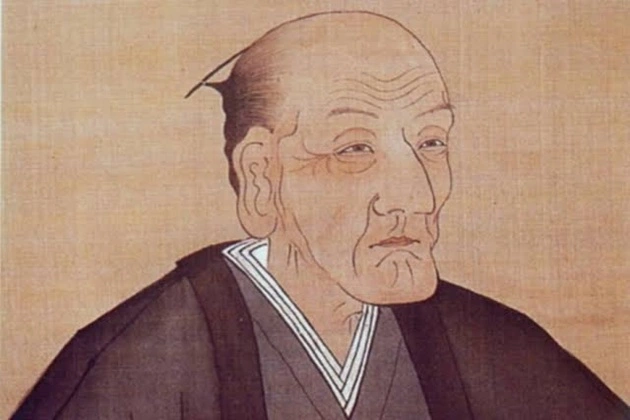
In Japanese history, the Mukoyoshi Institute has raised many great people: Toyotomi Hideyoshi, the great shogun, was able to reunify Japan in the 16th century. He was of peasant origin, but rose to prominence due to the fact that he was adopted by a noble family as a child. Eisaku Sato, who served as prime minister from 1964 to 1972, was also adopted, and his brother Nobusuke Kishi headed the government a few years earlier. Uesugi Yozan, the famous daimyo of the Yonezawa region, came to the ruler’s family through adoption from another daimyo family. And such people can be named indefinitely.
From samurai houses to giant corporations
The most striking thing is that the tradition of adoption has not disappeared with the modernization of the country. This can be traced to the owners of such large companies as Canon, Kikkoman, Suzuki and Toyota. They also used adoption to have a worthy heir who would keep the family business going. When it came to multimillion-dollar assets and thousands of jobs, blood kinship was again secondary. The decisive factor was the ability to lead the business and take it further.
Even at the end of the 20th century, the number of such adoptions in rural Japan did not decrease, but on the contrary increased. Contrary to expectations, urbanization did not kill the mukoyoshi tradition, but only changed its appearance: now it was not so much about preserving the samurai name as about continuing farming or a small family business that would otherwise have simply disappeared. Probably, for someone, adopting someone else’s child to pass on an inheritance to him with his son sounds wild; then you can recall the legend about the monk and the tavern built on the site of the hot spring, which continues to work. There’s no better proof.