The world’s most expensive megaprojects and why they cost so much
We are a civilisation of builders. Actually, it was only by creating the first permanent settlements that our ancestors became fully human. Writing, animal husbandry, agriculture, handicrafts, art in a broad sense. All of this resulted from a sedentary lifestyle. But people have never had enough of what they have already achieved. Therefore, magnificent structures began to appear. Some of them have been standing for thousands of years, while others are known only from written sources, myths, and legends. Each megalith, not to mention the more complex and integral structures, has its own story. Hundreds, thousands, sometimes even millions of people worked for a single goal. It is the context that gives the already impressive buildings a sense of true grandeur. However, today the conversation will not be so much about history as about economics. How much did it cost to erect the most ancient architectural monuments? Which is more expensive, the Great Wall of China or the ISS?
7 world’s most expensive megaprojects—and why they cost so much
1. The interstate highway system of the USA
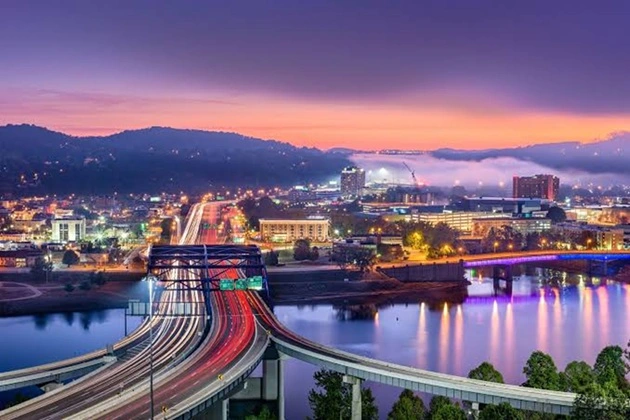
The project, launched in 1956 by President Dwight D. Eisenhower, has become the largest road system in history. 78 thousand kilometers of asphalt, which connected all the largest cities of the country. The interstate highway system has changed not only the economy, but also the face of the United States. The car has become a necessity, not a luxury, but a means of transportation and a working tool. In addition, the increased mobility of millions of people has contributed to the development of the suburbs. Each state has published financial statements throughout the years of construction. That’s why we know the final price down to the last cent. By the early 90s, when all the major works were completed, the United States had spent 114 billion dollars. Taking into account inflation and changes in the labor code, today it will be 600-700 billion. Currently, the length of the network is slightly more than 1% of all U.S. highways. However, this “pitiful” percentage accounts for almost a quarter of the country’s total car traffic.
2. The International Space Station
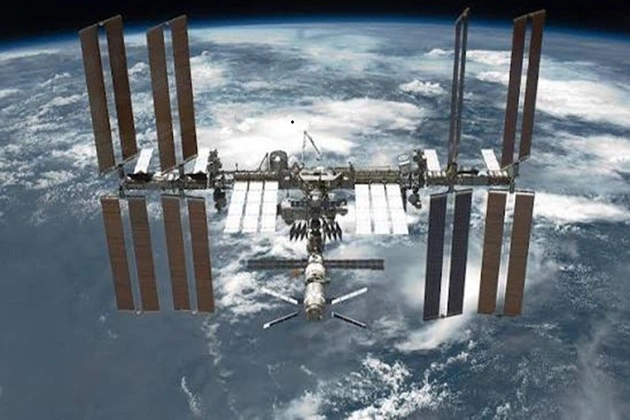
The ISS is the most expensive facility built by mankind. In addition, it is the largest structure assembled directly in space. The construction was initiated by the Russian Zarya module, launched in 1998. For several more years, dozens of additional elements were docked to the station, from solar panels and scientific equipment to entire compartments. The constant presence of people on board has been maintained since November 2000. One way or another, 15 countries participated in the construction. Although Russia and the United States certainly made the greatest contribution. Despite the fact that the ISS is a relatively recent project, its total cost still varies from 100 to 200 billion dollars. The fact is that construction and assembly are far from the only cost items. Some modules were developed over the years, and it took 40 assembly missions. Most of them were carried out by American shuttles. It cost hundreds of millions to launch each device. Accidents, the cost of regular shipments of goods and new equipment are not taken into account here; in short, maintenance, which is only growing every year. By the way, the entire Apollo lunar program would have cost about the same amount today.
3. Suez Canal
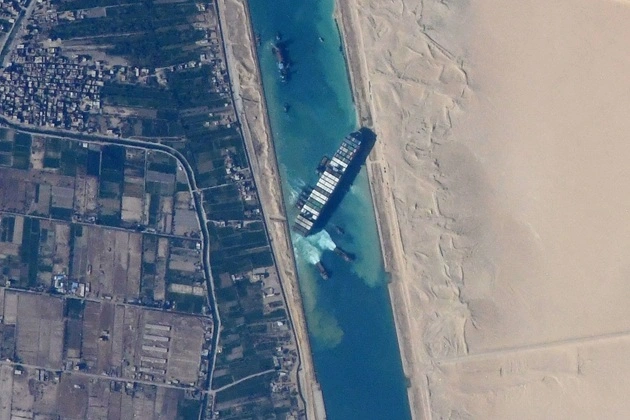
The Suez Canal is, without exaggeration, one of the most important infrastructure projects in history. The 193 km long man-made canal has been relevant for two centuries and will remain so for a very long time. Thanks to the canal, the route between Europe and Asia has been reduced by 8 thousand kilometers. The construction lasted from 1859 to 1869 under the leadership of a subject of the French Empire, Ferdinand de Lesseps. Finally, we come to more or less objective estimates of the cost. The construction of the Suez Canal, unlike the ancient structures, is well documented. According to official archives, the project cost 433 million francs. Visit. A F R I N I K . C O M . For the full article. However, it is necessary to take into account inflation, changes in purchasing power, as well as the difference in the value of gold then and now. In modern realities, the channel would cost 15-20 billion dollars. But what is much more surprising is that its construction could hardly have been greatly accelerated.
4. The Great Wall of China
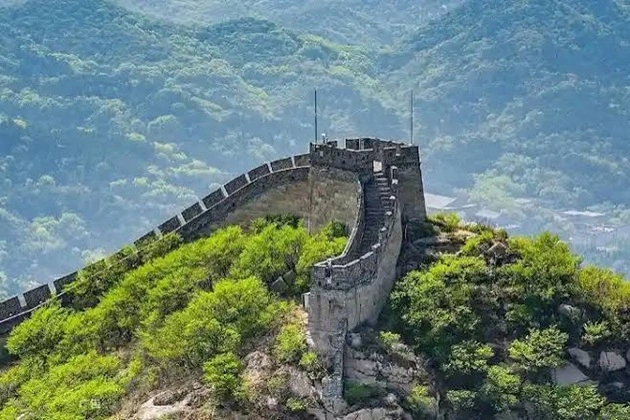
We turn to the largest defensive structure in the history of mankind. People have never built anything like this before and probably won’t ever again. In any case, not in the format of a physical wall. However, the Great Wall of China is still not a single structure. The first system of fortifications appeared in the 3rd century BC under Qin Shi Huang. The last section was completed during the Ming Dynasty, already in the 17th century AD. It is precisely this length of time that makes it difficult to estimate the cost. How much can it cost? According to the most conservative estimates, 200 billion dollars will be needed for a 21,000-kilometer fortification. But in such calculations, only materials are taken into account.it is assumed that we will use modern technology. However, unlike the Great Pyramids, which were the project of a generation, the Chinese wall is the project of an entire civilization. Therefore, if you spread the costs over the millions of workers who have worked here for two thousand years, you can get a budget of tens of trillions of dollars. Historians believe that this amount does not reflect the real cost, but perfectly illustrates the scale.
5. Three Gorges Dam
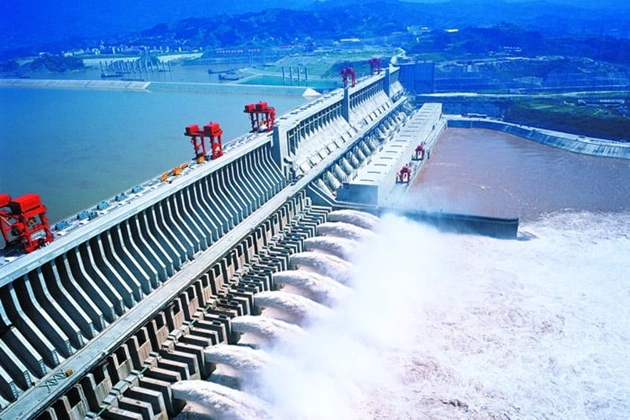
This is the largest hydroelectric power plant in the world and perhaps the most ambitious engineering project of the present. Construction began in 1994, when it was still customary to laugh at China. The main works on the Yangtze River were completed in 2006. At that time, the Celestial Empire was already viewed with much more respect. The length of the dam exceeds two kilometers, and the height reaches 185 meters. The “Three Gorges” changed the distribution of the Earth’s mass, and this really affected the length of the day. The day has become 0.06 microseconds longer. However, the value is completely elusive to humans. To make it clearer, let’s translate it into more understandable values and get 0.00000006 seconds. The official cost of construction was 180 billion yuan, but a number of economists believe that this amount does not fully correspond to reality. In addition to the construction itself, a lot of money was spent on the resettlement of one and a half million people, the creation of new roads, and the modernization of infrastructure. In addition, large-scale events aimed at supporting the ecological systems of the region were also held. Thus, the total cost increases to 35-40 billion dollars.
6. NEOM
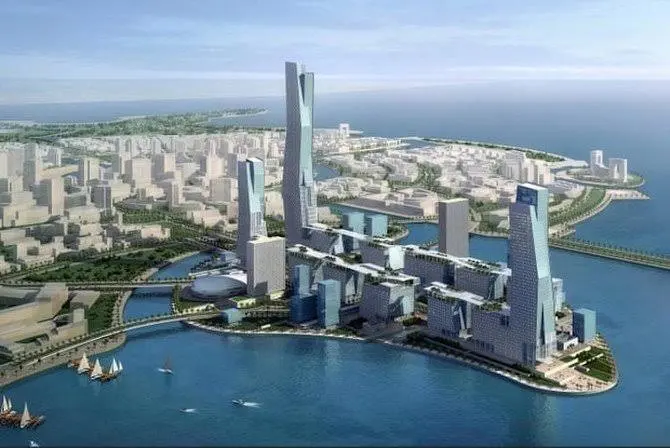
Finally, the most ambitious project of our time, and perhaps of the entire history of mankind. It is worth noting that NEOM is a whole complex of many elements. The main one is, of course, the 170-kilometer-long “City Line” built right in the desert. It sounds incredible, which is exactly what many economists, architects, and futurists are talking about. Nevertheless, Saudi Crown Prince Mohammed bin Salman does not seem to be backing down from his plans. The project has undergone some changes in recent years, but even satellite maps show that the process is underway. A straight line, cleared for the foundation, is already visible from space. Speaking of cost, for the first time we are faced with the opposite situation. There is a budget project for 500 billion dollars. However, all experts already agree that the implementation of the project will require much more money. If The Line is ever built, it will be the first city of a new type. Created from scratch, in a rather unfavorable location, and almost completely autonomous. The entire area of NEOM is 26,500 square kilometers. For a moment, this is more than the territory of Slovenia or Israel.
7. The Great Pyramids of Giza
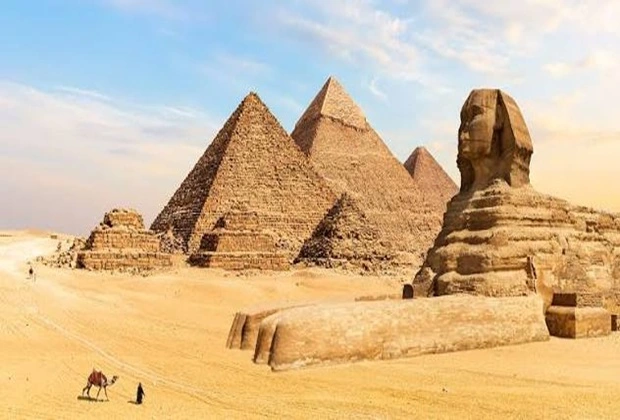
The Pyramids at Giza, erected almost 5,000 years ago, remain one of the largest construction projects in our history. The most massive of them, the pyramid of Khufu (or Cheops), with an initial height of 146 meters and a total weight of about 6 million tons, maintained the status of the tallest structure in the world for 3,800 years. It wasn’t until the late Middle Ages that the Lincoln Cathedral of the Virgin Mary broke the record. However, this happened thanks to the long spire, which collapsed two centuries later. Estimates of the cost of building pyramids vary greatly. Averaging it, we get figures of 10-15 billion dollars apiece. Of course, no money existed at the time of construction. Therefore, researchers calculate the approximate cost of maintaining a workforce of tens of thousands of people. Infrastructure construction, workshops, bakeries, housing, as well as logistical costs. If you try to implement such a project today, using exclusively ancient technologies, but relying on modern social norms, the price tag will be fantastic. It will definitely exceed a trillion dollars, perhaps many times. Most of this amount will be spent not even on materials, but on decades of manual labor.